Robohub.org
 

Opportunities in DARPA SubT Challenge

by
14 July 2020


share this:
Opportunities Still Available to Participate in the DARPA Subterranean (SubT) Challenge: Cave Circuit 2020 and Final Event 2021. Join us for an introduction of the DARPA Subterranean Challenge with Program Manager Timothy Chung on Monday July 20 at 12pm PDT https://www.eventbrite.com/e/opportunities-with-darpa-subt-challenge-tickets-113037393888

About this Event

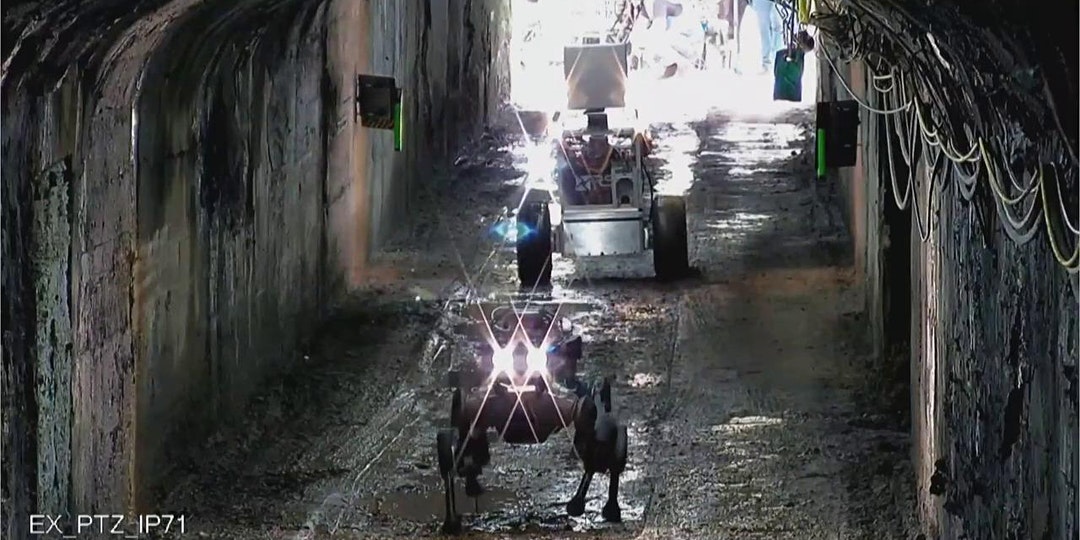
The DARPA Subterranean (SubT) Challenge aims to develop innovative technologies that would augment operations underground.

The SubT Challenge allows teams to demonstrate new approaches for robotic systems to rapidly map, navigate, and search complex underground environments, including human-made tunnel systems, urban underground, and natural cave networks.

The SubT Challenge is organized into two Competitions (Systems and Virtual), each with two tracks (DARPA-funded and self-funded).

The Cave Circuit, the final of three Circuit events, is planned for later this year. Final Event, planned for summer of 2021, will put both Systems and Virtual teams to the test with courses that incorporate diverse elements from all three environments. Teams will compete for up to $2 million in the Systems Final Event and up to $1.5 million in the Virtual Final Event, with additional prizes.

Learn more about the opportunities to participate either virtual or systems Team: https://www.subtchallenge.com/
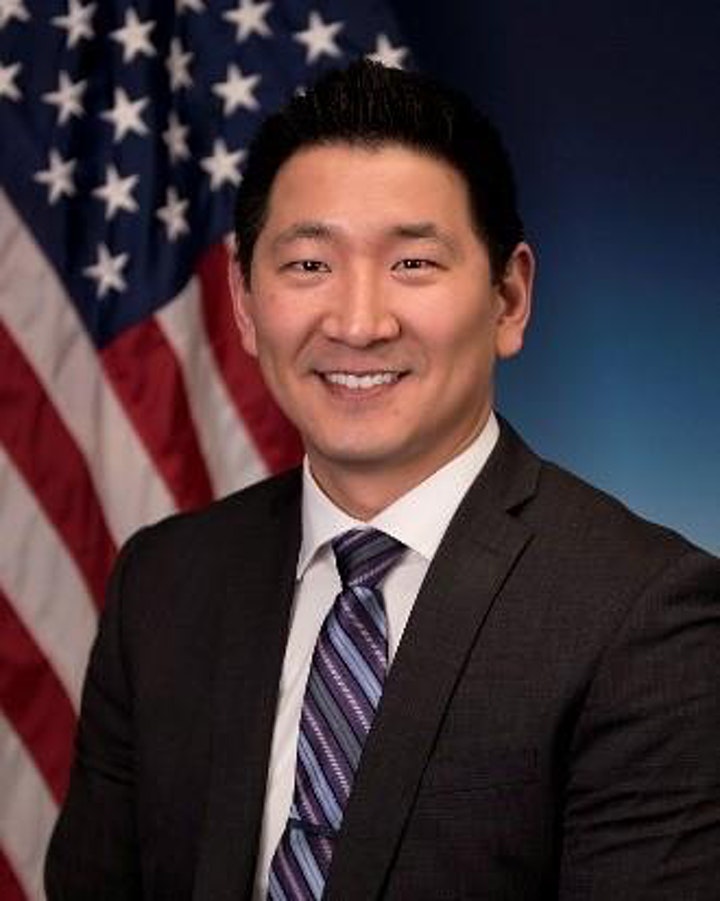
Dr. Timothy Chung – Program Manager

Dr. Timothy Chung joined DARPA’s Tactical Technology Office as a program manager in February 2016. He serves as the Program Manager for the OFFensive Swarm-Enabled Tactics Program and the DARPA Subterranean (SubT) Challenge. His interests include autonomous/unmanned air vehicles, collaborative autonomy for unmanned swarm system capabilities, distributed perception, distributed decision-making, and counter unmanned system technologies.

Prior to joining DARPA, Dr. Chung served as an Assistant Professor at the Naval Postgraduate School and Director of the Advanced Robotic Systems Engineering Laboratory (ARSENL). His academic interests included modeling, analysis, and systems engineering of operational settings involving unmanned systems, combining collaborative autonomy development efforts with an extensive live-fly field experimentation program for swarm and counter-swarm unmanned system tactics and associated technologies.

Dr. Chung holds a Bachelor of Science in Mechanical and Aerospace Engineering from Cornell University. He also earned Master of Science and Doctor of Philosophy degrees in Mechanical Engineering from the California Institute of Technology.

Learn more about DARPA here: www.darpa.mil


Andra Keay is the Managing Director of Silicon Valley Robotics, founder of Women in Robotics and is a mentor, investor and advisor to startups, accelerators and think tanks, with a strong interest in commercializing socially positive robotics and AI.

            AUAI is supported by:


Subscribe to Robohub newsletter on substack


Related posts :

Developing active and flexible microrobots

  13 May 2026
This class of robots opens up possibilities for biomedical applications.

How to teach the same skill to different robots

  11 May 2026
A new framework to teach a skill to robots with different mechanical designs, allowing them to carry out the same task without rewriting code for each.

Robot Talk Episode 155 – Making aerial robots smarter, with Melissa Greeff

  08 May 2026
In the latest episode of the Robot Talk podcast, Claire chatted to Melissa Greeff from Queen's University about autonomous navigation and learning for drones.

New understanding of insect flight points way to stable flapping-wing robots

  07 May 2026
The way bugs and birds flap their wings may look effortless, but the dynamics that keep them aloft are dizzyingly complex and difficult to quantify.

Robotically assembled building blocks could make construction more efficient and sustainable

  05 May 2026
Research suggests constructing a simple building from interlocking subunits should be mechanically feasible and have a much smaller carbon footprint.

Robot Talk Episode 154 – Visual navigation in insects and robots, with Andrew Philippides

  01 May 2026
In the latest episode of the Robot Talk podcast, Claire chatted to Andrew Philippides from the University of Sussex about what we can learn from ants and bees to improve robot navigation.

Ultralightweight sonar plus AI lets tiny drones navigate like bats

  29 Apr 2026
Researchers develop ultrasound-based perception system inspired by bat echolocation.

Gradient-based planning for world models at longer horizons

  28 Apr 2026
What were the problems that motivated this project and what was the approach to address them?


AUAI is supported by:


Subscribe to Robohub newsletter on substack


©2026.02 - Association for the Understanding of Artificial Intelligence